
Create a Wallet
Understand creation versus import and plan an offline recovery backup before regular use.
Open guide →imtoken Multi-chain Wallet
A multi-chain wallet, blockchain network and Web3 knowledge hub from imtoken
Learn how to manage multi-chain assets, choose networks, send and receive, connect to DApps, review approvals and build stronger wallet-security habits from first setup through ongoing on-chain activity.
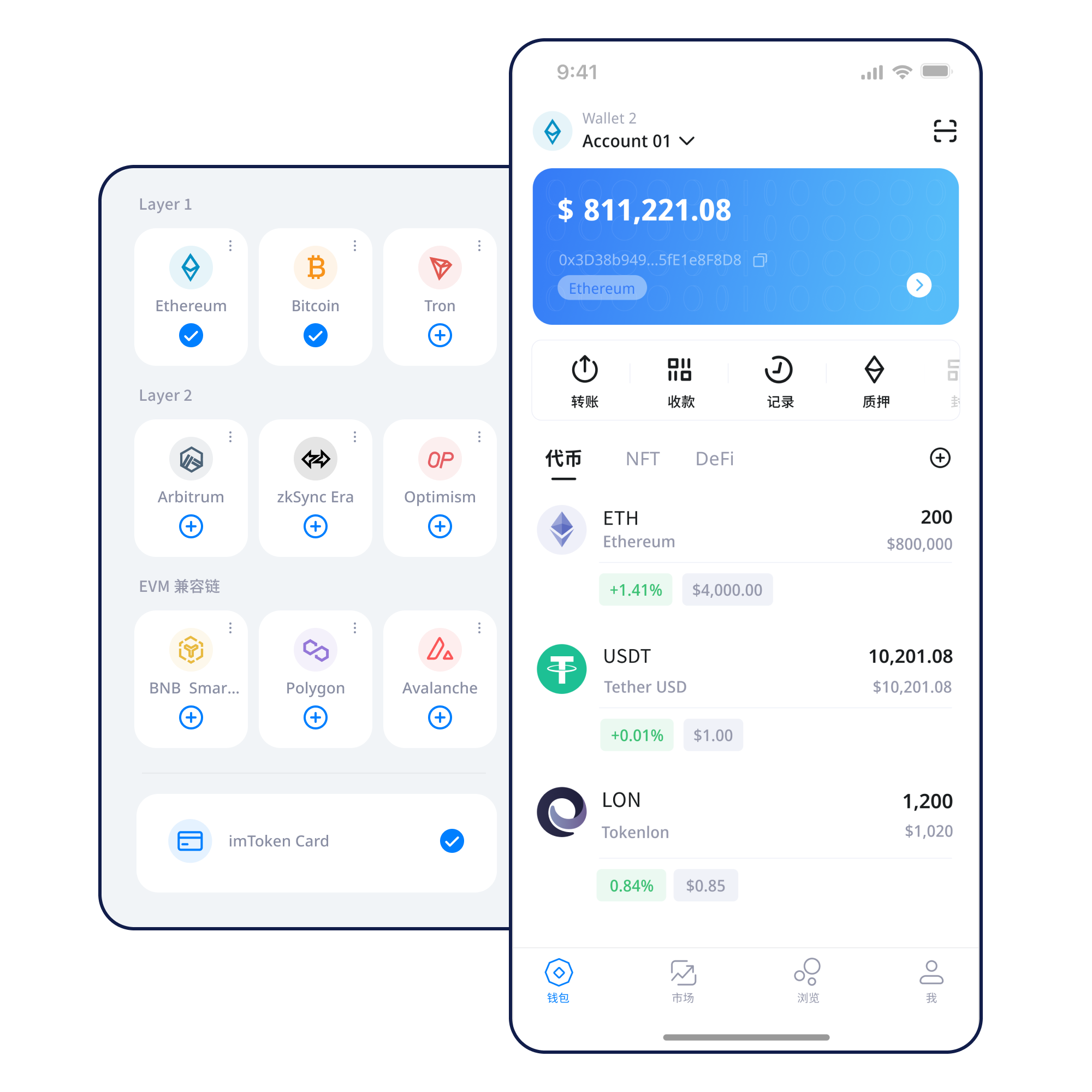
Understand creation versus import and plan an offline recovery backup before regular use.
Open guide →Keep seed phrases and private keys under your control; do not pass them through screenshots, chats or unknown sites.
Open guide →Confirm the network before sharing an address; similar address formats do not mean the same chain.
Open guide →Review address, network, asset, amount and gas, then keep the transaction hash after broadcast.
Open guide →Connection is only the start; review every signature, approval and contract request on its own.
Open guide →Wallet Capabilities
The wallet interface is an entry point; assets, transactions and approvals are ultimately recorded by their networks. Separating what the interface shows from what happened on-chain makes troubleshooting more reliable.
Identify the network first, then evaluate the address, gas and confirmation state.
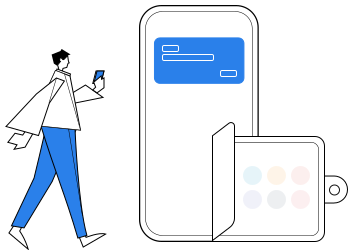
Receiving starts with address and network checks; sending adds asset, amount, gas and transaction-hash review.
View assets, manage networks and track transactions on mobile while verifying sources before DApp use.
Browser sessions require ongoing domain, account-request, signature and approval review. Disconnect sessions you no longer need.
Users remain responsible for seed phrases and private keys. Offline backup, per-request review and periodic approval cleanup are foundational habits.
Explore Networks
Networks maintain separate account state and asset records. Confirm where the asset lives and which network the recipient expects instead of relying on address format alone.
Learn more →Nodes propagate transactions, blocks record state changes, and confirmations reflect how deeply activity is recorded. Explorers help verify public on-chain facts.
Learn more →
EVM networks share account and contract patterns, while chain IDs, gas assets, token contracts and approvals remain network-specific.
Learn more →
Layer 2 systems relate to mainnet settlement, but bridging, transfer state, confirmation and waiting periods need separate review.
Learn more →
Gas represents part of network execution cost, while confirmations describe recorded state. A higher fee never replaces address or network checks.
Learn more →Wallet Journey
All download entry points lead to the site download page and require a deliberate user click.
Creation and import solve different needs. Before importing, confirm the recovery data comes from your own backup.
Keep the seed phrase offline rather than in chat, email, cloud notes or unknown websites.
Confirm the network name, the chain where the asset exists and the network expected by the recipient.
Check the address, amount and gas, then review what the signature request will actually do.
Keep the transaction hash, verify confirmations on-chain and periodically review DApp approvals you no longer need.
Web3 & DApp
Review every signature and approval separately. Verify the domain, requested account access, signature details and approval target, then disconnect sessions you no longer need.
Read the Web3 guide →Security
Seed phrases and private keys remain under user control, and imtoken personnel will not ask for them. Verify address, network and amount before transfers; review each DApp signature and approval; and use extra caution on public devices, public networks or remote-control sessions. On-chain transactions generally cannot be unilaterally reversed by a wallet, so pre-confirmation review matters.
Open Security CenterFeatured Start
Start with addresses, seed phrases, private keys, networks and gas, then move to transaction hashes, DApps and approvals. Understanding the relationships makes unusual requests easier to spot than memorizing steps alone.
Start learning →Ethereum / PoS
PoS relies on validators participating in consensus. Reward sources, validator state, withdrawal and exit mechanics all affect outcomes and should not be treated as fixed yield or guaranteed return.
Read staking basics →Updates
No invented dates, partnerships, user counts or market rankings—only information relevant to site use and risk education.
All download links point to /download.html, and language switching keeps users on the matching topic.
Similar address formats do not mean the networks are identical. Check the asset network and recipient expectation.
imtoken support will not ask for a seed phrase or private key. Stop any support flow that requests recovery secrets.
Staking does not guarantee returns. Rewards, waiting periods, validator state, contract risk and price volatility all require review.
FAQ
A wallet manages keys and constructs requests, while account state and assets are recorded on the relevant blockchain. Changing a device or interface does not automatically move those assets.
That is not recommended. Screenshots may sync to cloud storage or become readable by other software. Use an offline backup method instead.
No. Stop any troubleshooting flow that asks you to send a private key, seed phrase or verification code.
Some networks use compatible address formats, but assets remain recorded separately on each network. Always verify the network.
At minimum, review the recipient address, network, asset, amount and gas, then check them again on the confirmation screen.
Gas is generally a network resource and execution fee. Its cost can vary with protocol rules and network demand.
A transaction hash is a unique transaction identifier that can be used with a block explorer to inspect broadcast, execution and confirmation state.
imtoken
Understand wallet control and network checks first, then keep reviewing signatures and approvals as you use Web3.